






Overview
The Right Margin aims to be the ultimate writing tools for writers by providing them with support, growth, guidance and encouragement.
Team
My role was as Lead UX Designer with additional focus on service design and client management. I worked closely with the UX Designer and head of marketing at The Right Margin.
Tools & Methods
- Design strategy
- Interaction design for web
- Information architecture
- Service design
- User research
The Problem
The Right Margin aims to be the go-to writing tool for aspiring authors and semi-professional writers. While the current product focuses heavily on helping writers set goals, the team at The Right Margin are at a point where they'd like to consider other ways in which they can support their target audience achieve their writing goals. Being a small start-up, the team has limited resources and needs to prioritize its next steps.
The Solution
Our solution was to help our clients gain insights into their target audience while helping them work on a product redesign. We identified key areas of opportunity based on in-depth research of potential users. We also provided the team with wireframes that were scalable in design, allowing The Right Margin to focus on building out great features for any particular area of opportunity but also add features to support the entire writing journey as the product expands.
The Process
What's it like to be a writer?
We conducted 10 in-person interviews with the client's target users as the primary method of research. The interviews focused on understanding their entire writing journey, and the emotions attached to it. We were also interested in understanding how writers overcame negative experiences in their writing process.
Focused insights for design: Jeremy and Monica
Using affinity diagrams, we uncovered numerous themes in our interviews. Within each theme lay a spectrum in which our interviewees fit in. For example, in a theme labeled "Initial Writing Style", we found interviewees who started writing with no structure, a lot of structure and those in between.
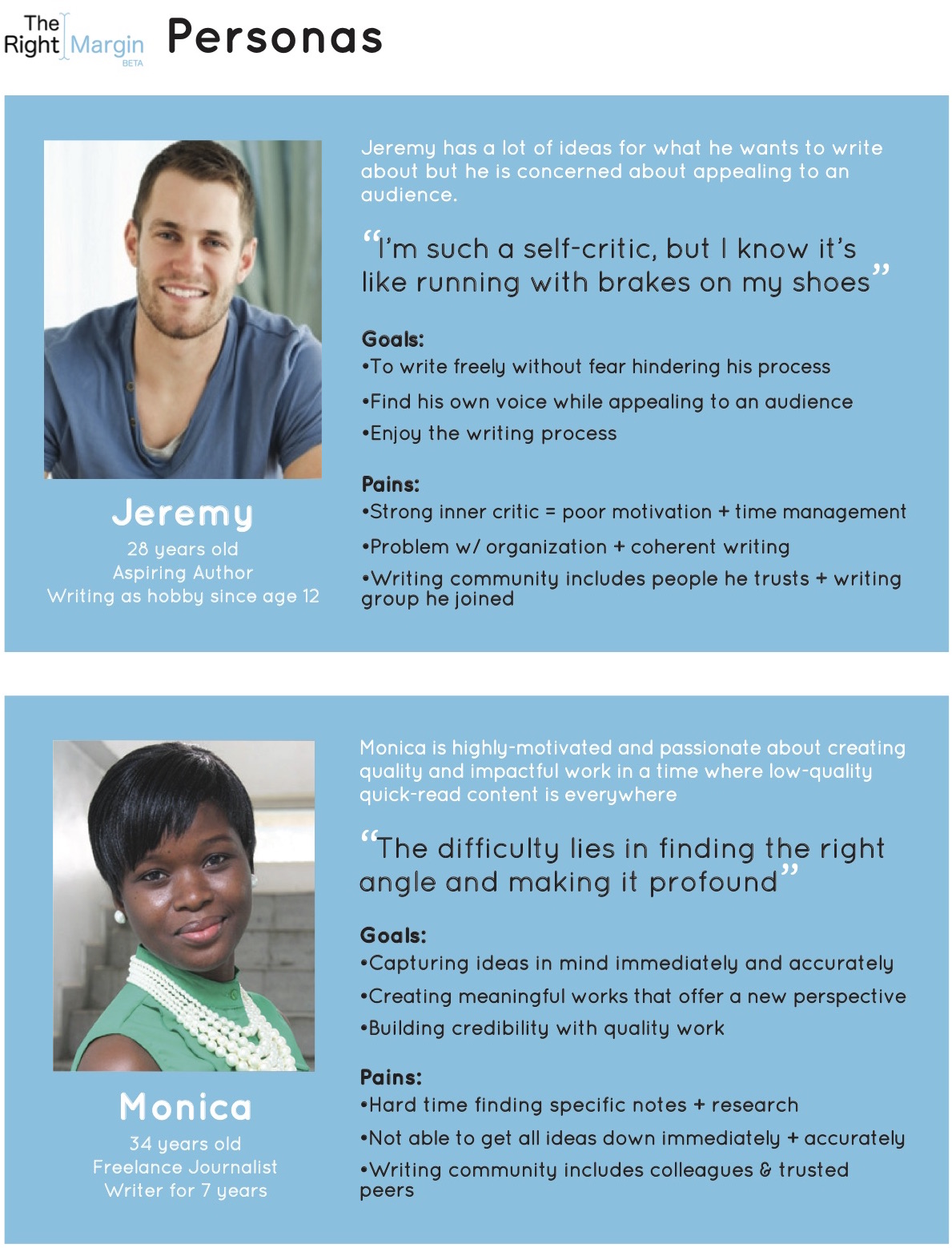
We then developed two district personas to help guide our designs: Jeremy the Aspiring Author and Monica the Freelance Journalist, both with distinct goals and pains.
After some revisions with the clients, these personas were used as anchor points for all conversations regarding our design decisions. Our primary persona for this project is Jeremy, as solving for for his challenges will also solve for Monica's.

Identifying opportunity through the user's writing journey
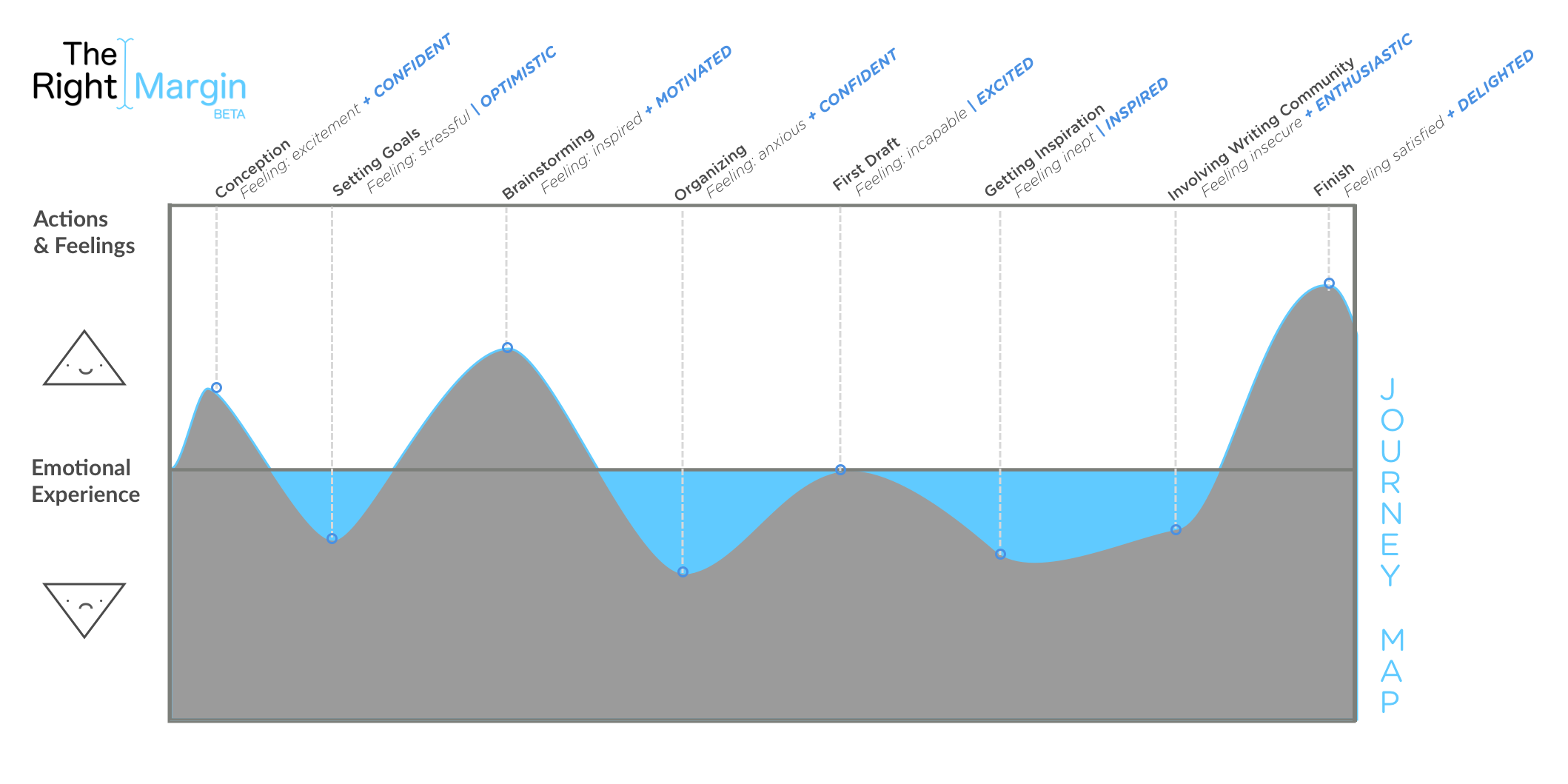
We used Jeremy's emotional experience throughout his writing journey to identify key areas of opportunity for The Right Margin. Aligning this process with the client's business goals, we identified 3 primary areas of opportunity and 1 secondary area of opportunity:
Primary Area of Opportunity:
- Setting goals
- Organizing
- Getting Inspiration
Secondary Area of Opportunity:
- Involving the writer's writing community

Detailed Solution

User Flow
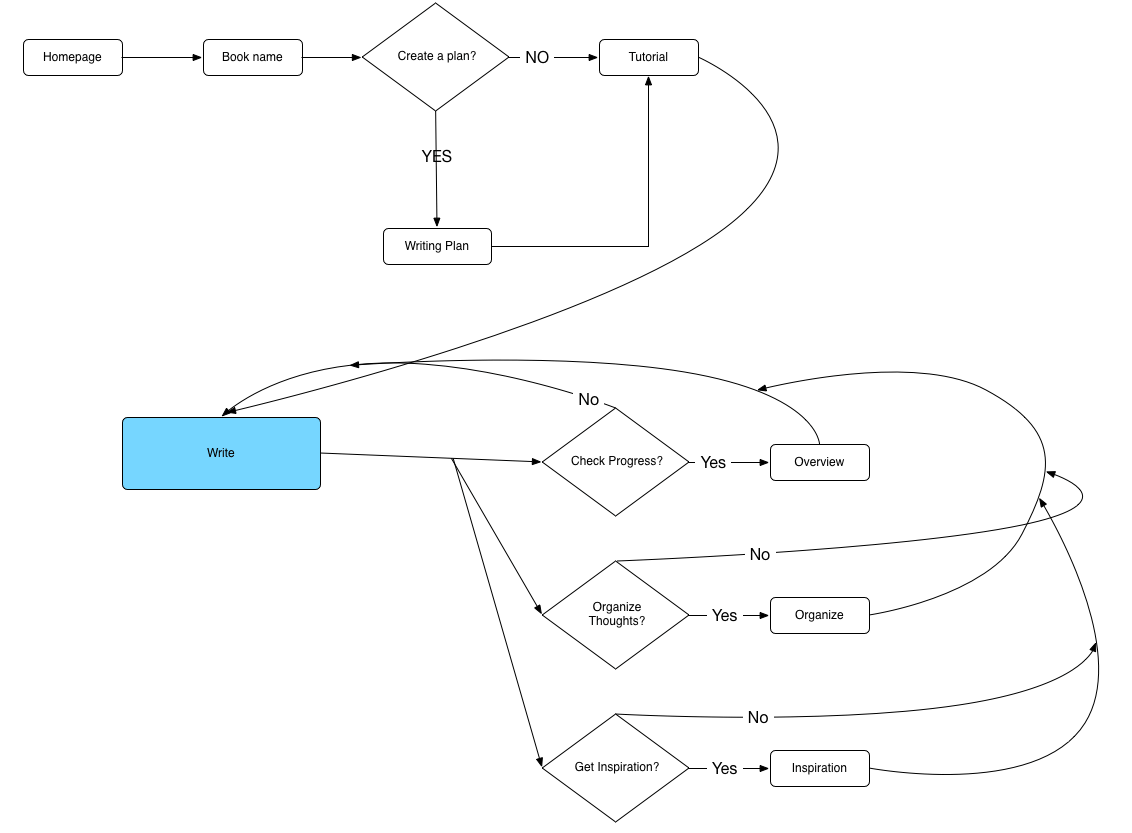
The following user flow was developed based on our primary persona, Jeremy.

At the end of the day, it's all about writing
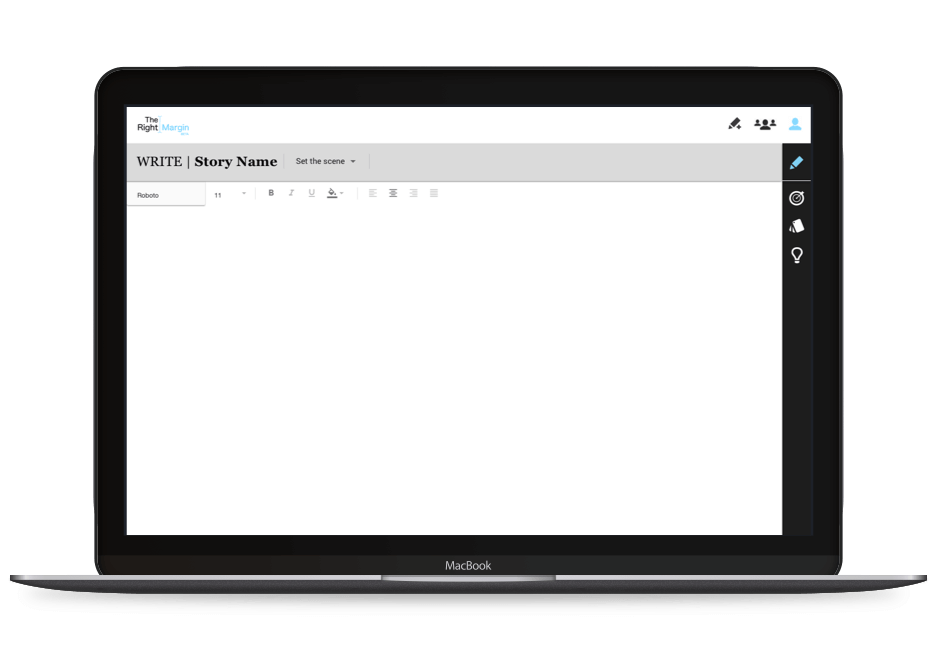
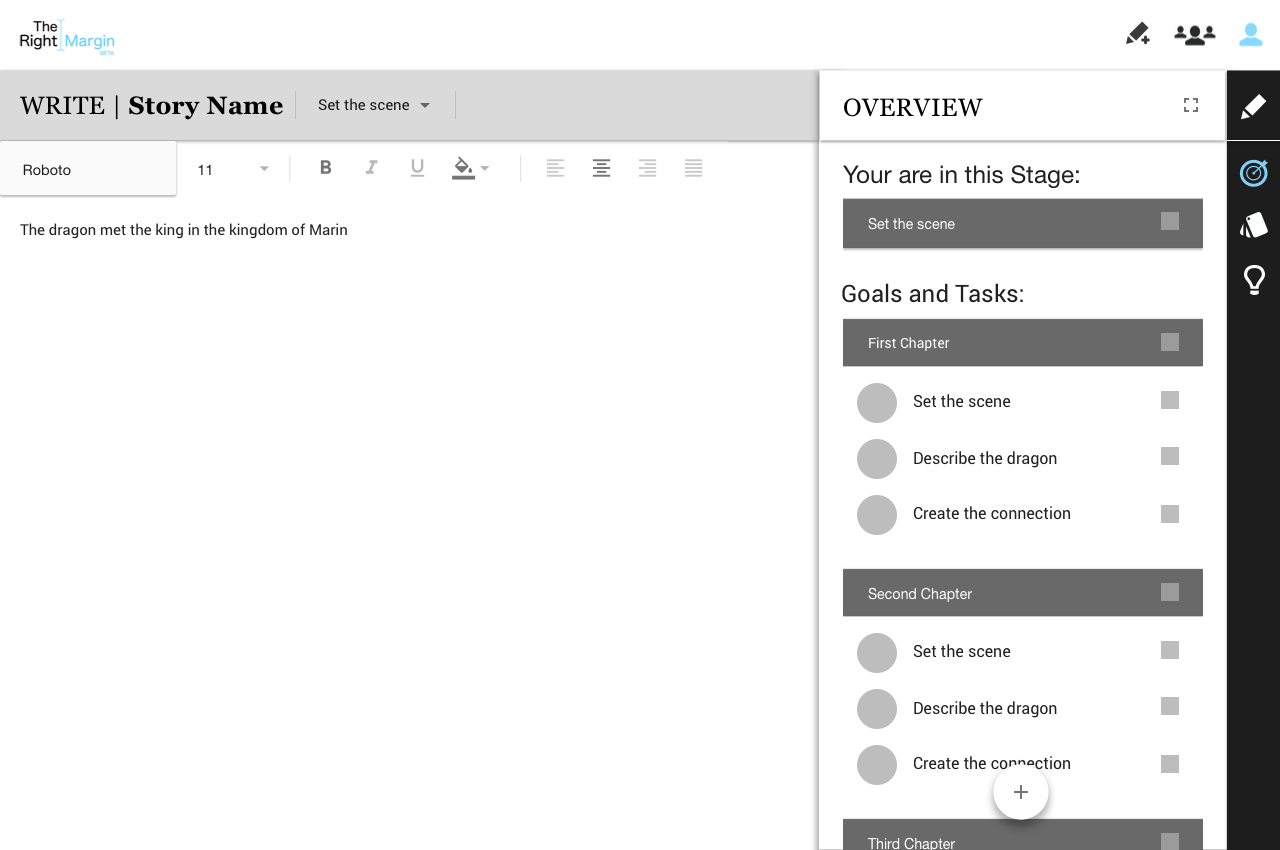
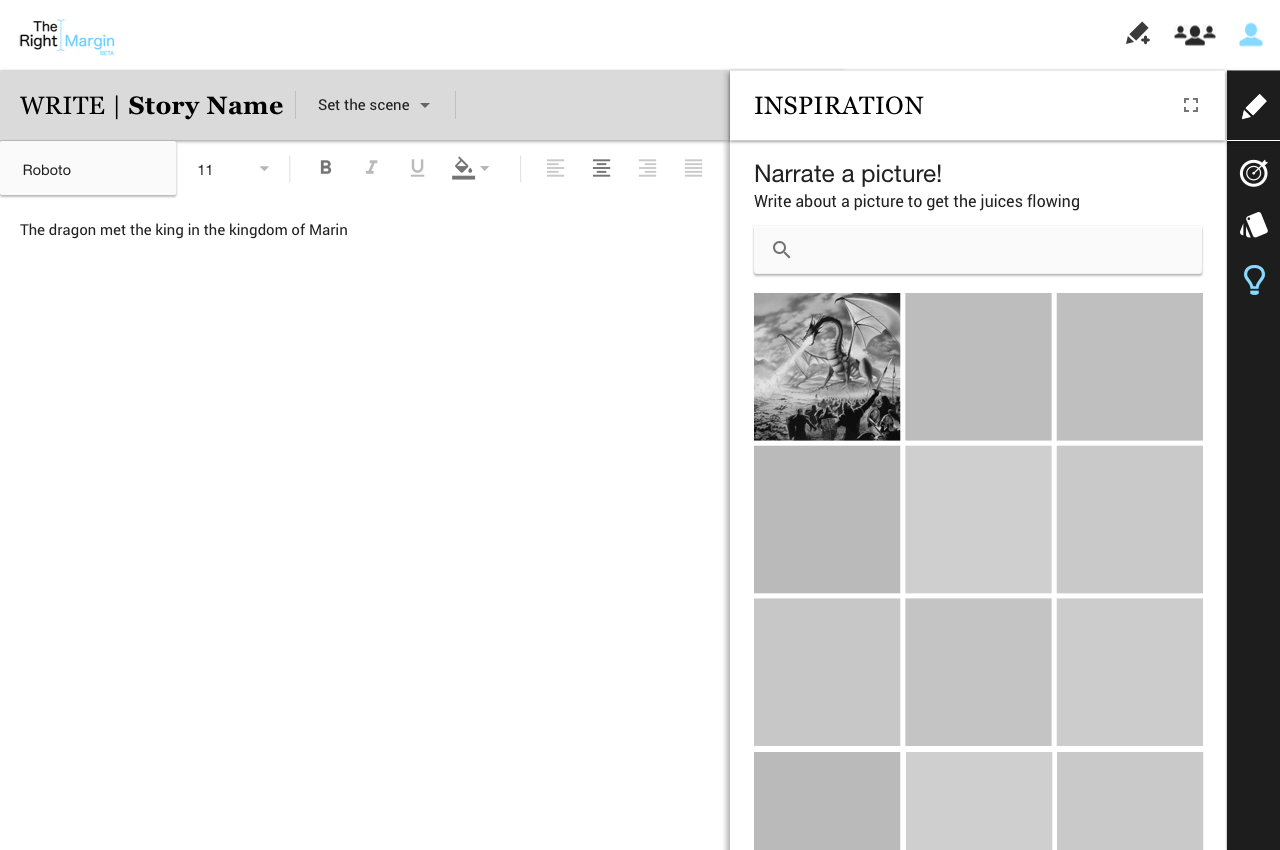
The primary screen is simple and allows the writer to focus on doing the one thing they want to do: write.
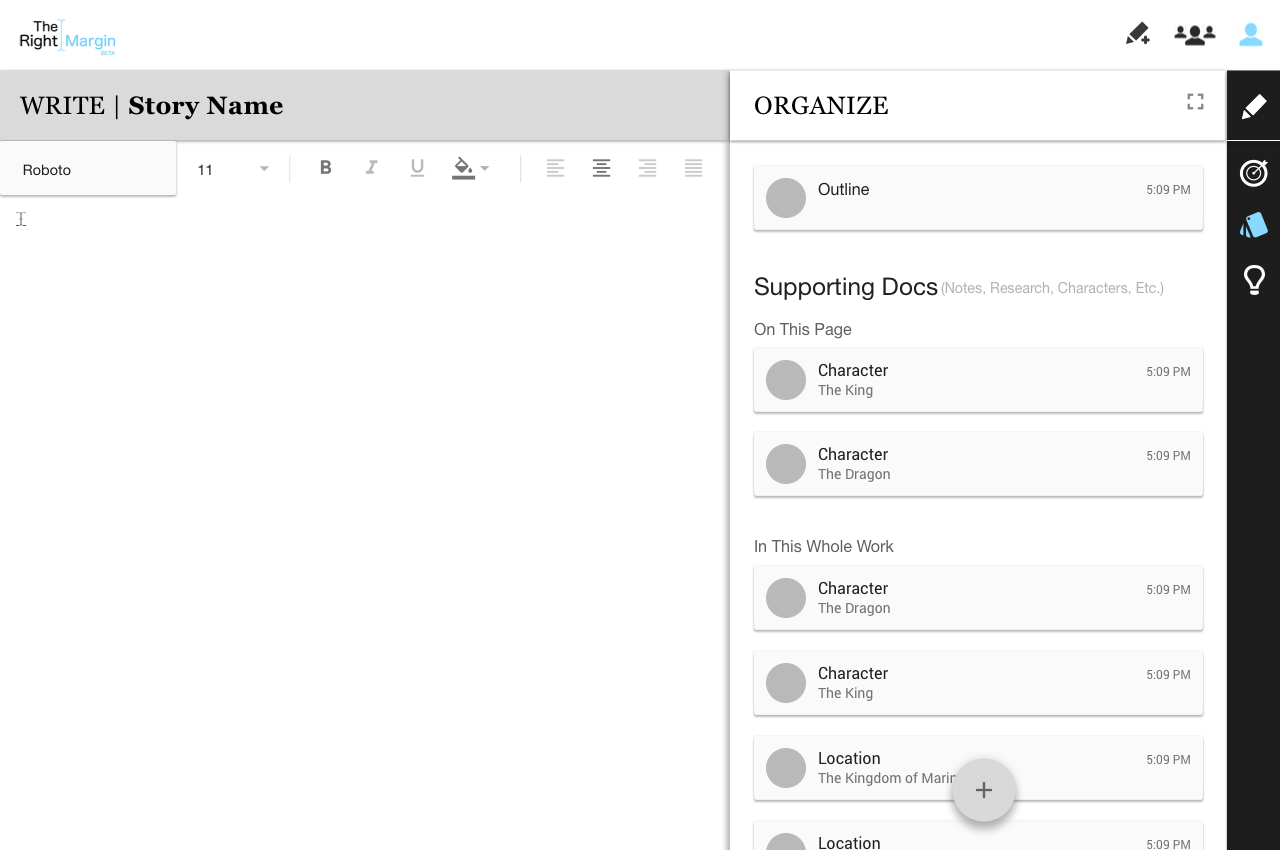
On the right margin of the screen, the writer is provided with functionality to help them with their goals, organizing their thoughts and obtaining inspiration.
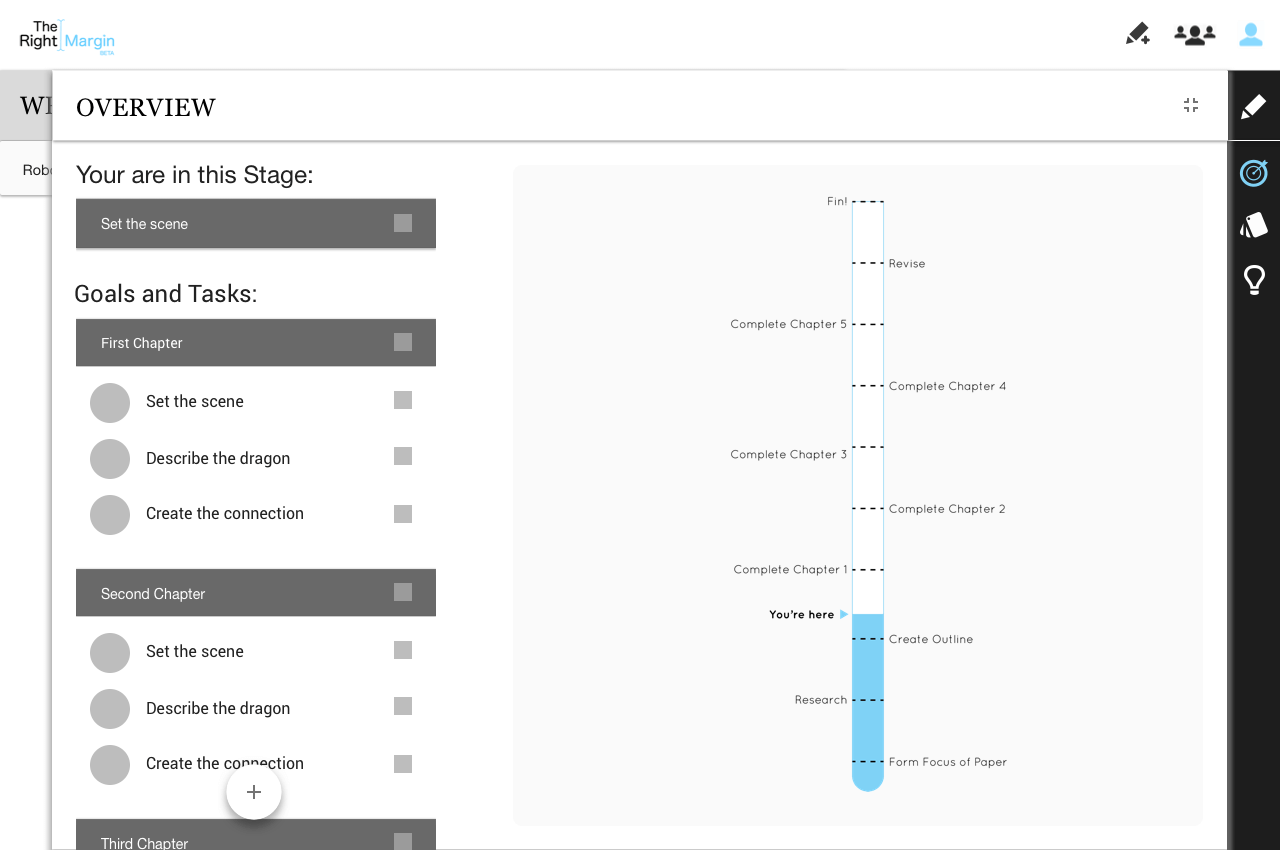
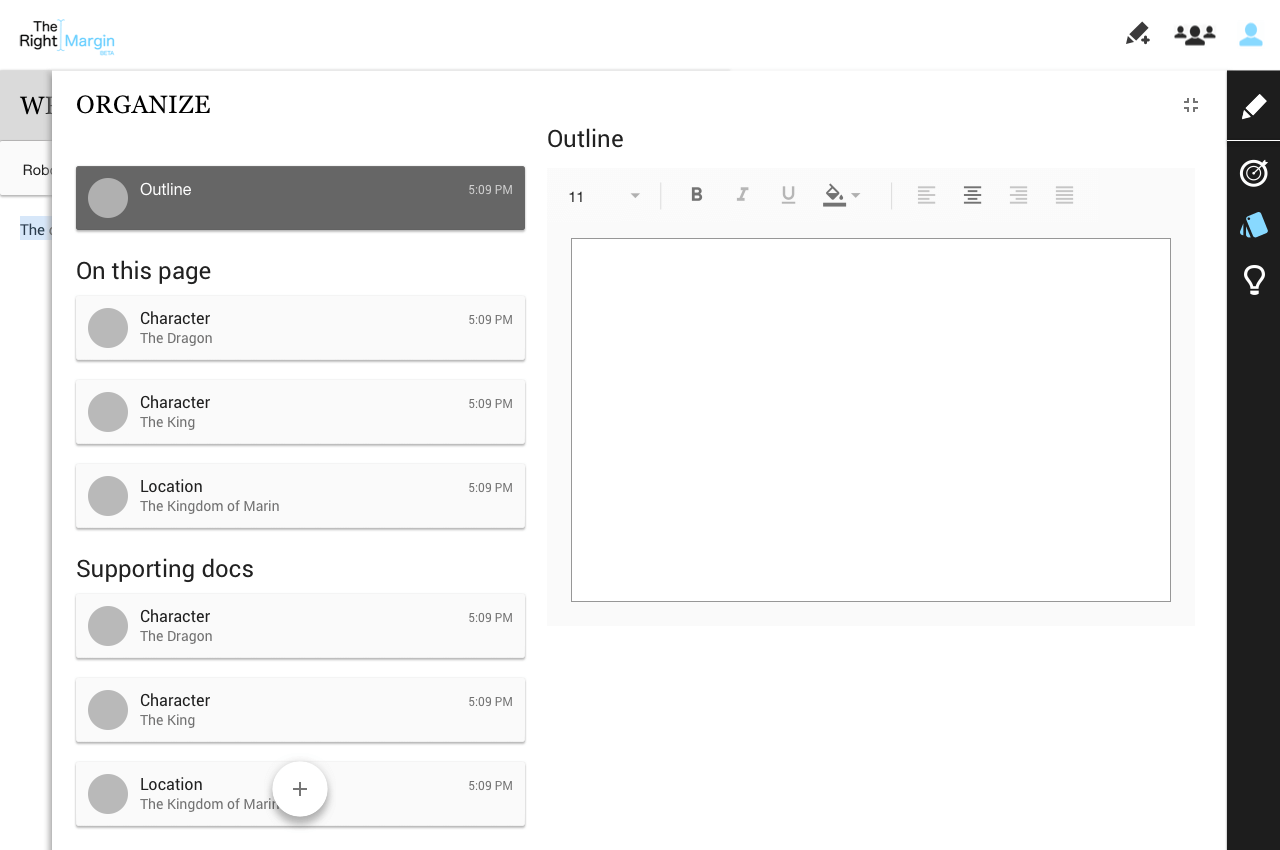
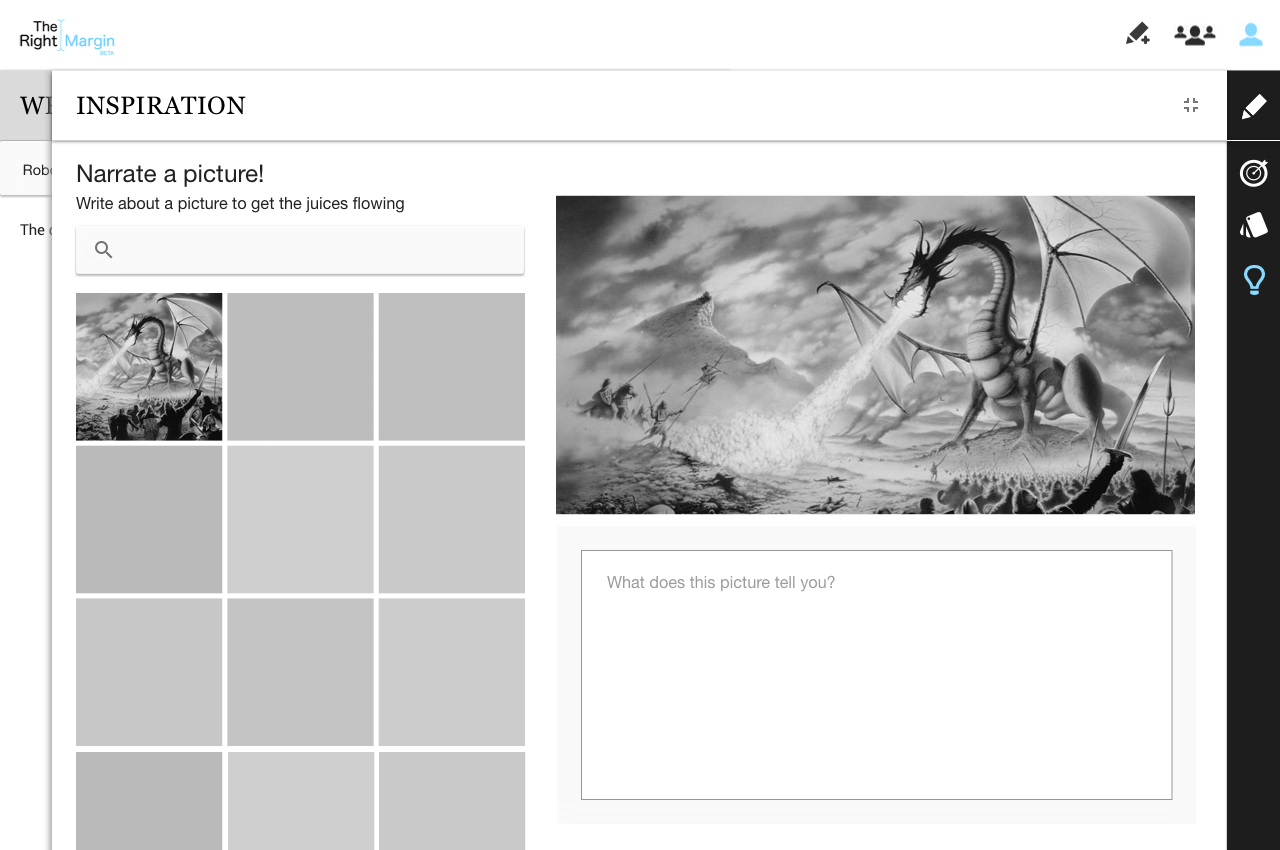
As the writer clicks on the icon of any one of these features, he or she will see a pane slide in from the right and have both their writing space and this feature side by side. The writer can also focus on the particular feature by clicking on the expand button, where the right pane will overlay on top of the writing space.
Goal Setting


Organizing


Inspiration


Next Steps
Conveying the language of design
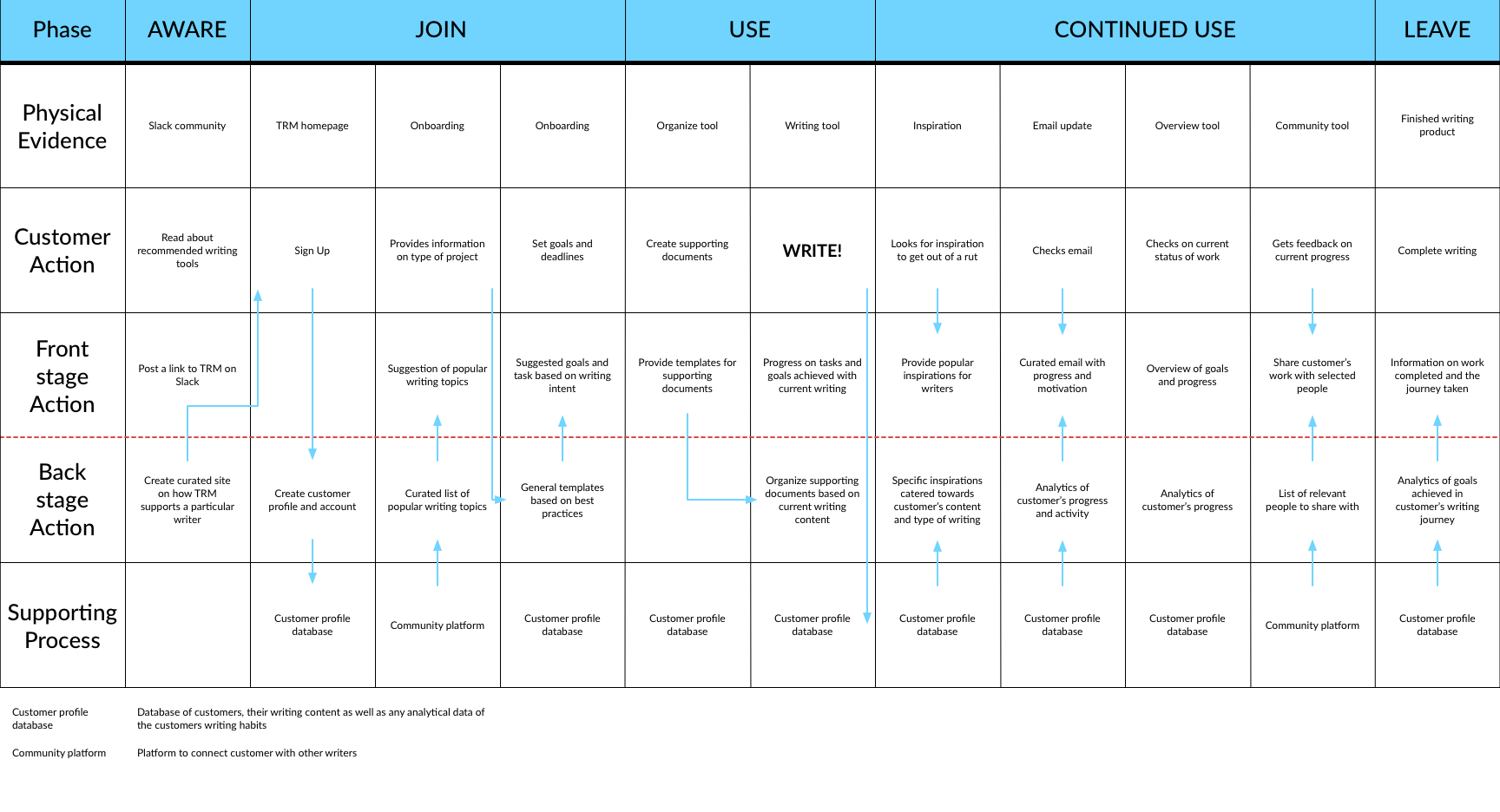
We provided the team at The Right Margin with tools to understand the bigger picture when designing for writers. Using a Service Blueprint as shown below, we show the journey of a potential new user to The Right Margin, from their experience discovering the product to the end when they complete their writing.

Align goals, execute and refine
With this framework and by working in short sprints, the team at The Right Margin is fully equipped to create its product vision for the future. Features can be built in segments, and refined with usability tests and more user research.